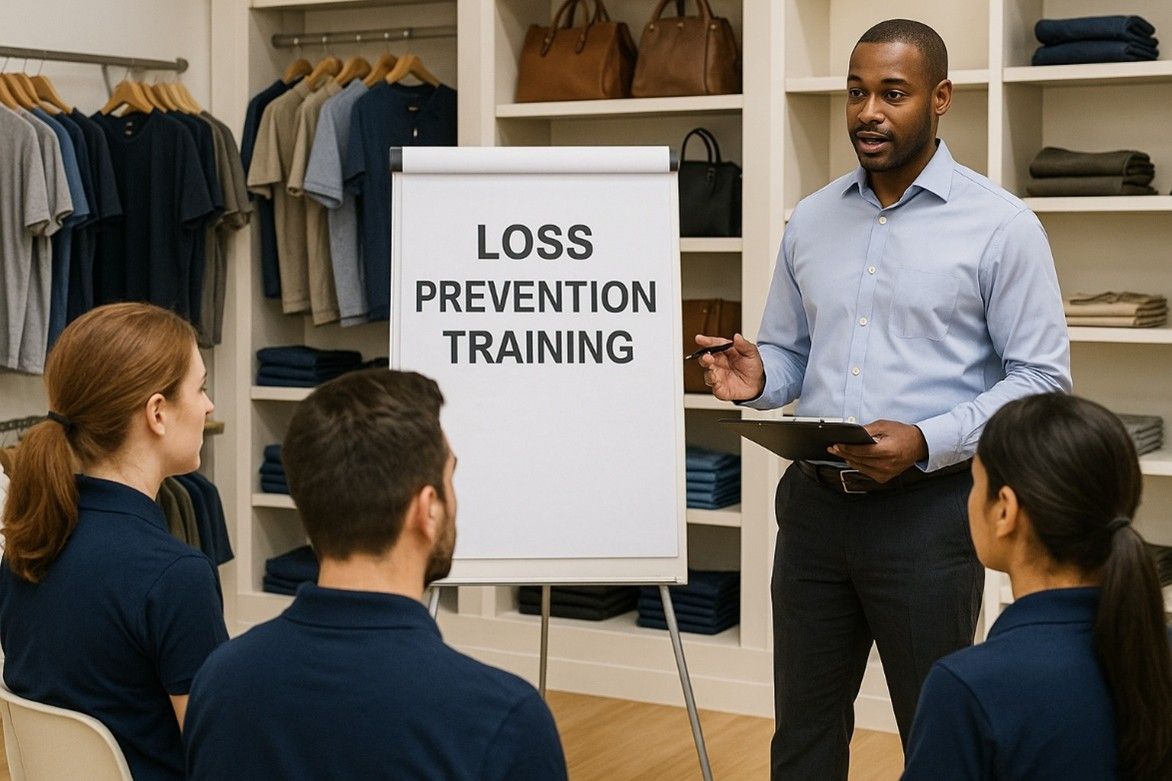
Frontline employees are the first line of defense in any loss prevention strategy. They handle inventory, interact with customers, manage transactions, and observe workplace behaviour on a daily basis. When properly trained and supported, they play a powerful role in reducing losses, preventing incidents, and strengthening organizational culture.
Many losses occur because employees are unaware of procedures or do not understand their importance. Training turns expectations into habits. Well trained teams:
- Identify suspicious activity earlier
- Avoid costly process errors
- Maintain accurate documentation
- Protect company assets more effectively
- Contribute to a safer, more honest workplace
Organizations that invest in training see measurable improvements in performance and accountability.
Frontline staff come from diverse backgrounds and bring different levels of experience. Training must therefore be clear, practical, and directly relevant to their daily tasks. Overly complex sessions create confusion. Simple, focused lessons ensure employees remember what they learn.
- Point of sale procedures
- Receiving and inventory handling
- Customer service interactions
- Reporting protocols
- Access control
- Safety and incident response
- Ethical expectations
When employees understand the “why” behind procedures, compliance becomes natural rather than forced.
Traditional lectures rarely produce lasting results. Effective training uses real scenarios, demonstrations, and role playing. When employees see practical examples, such as how a shoplifter behaves or how an internal fraud pattern unfolds, they learn more quickly and retain information longer.
Short, frequent training sessions are more effective than long, infrequent ones. Regular reinforcement ensures procedures are followed consistently.
Training must be supported by leadership. When supervisors model the behaviours taught in training, employees are more likely to follow. Recognition programs also encourage positive behaviour. Simple gestures, such as acknowledging an employee who prevented a loss, create a culture where everyone feels responsible for safety and security.
Digital training modules, short videos, and mobile learning tools help employees learn at their own pace. Technology also allows organizations to track completion rates, test knowledge, and update content quickly when procedures change.
Training is not a one-time event. It must be reviewed regularly to stay relevant. Loss prevention professionals should monitor incident patterns, gather employee feedback, and adjust training materials accordingly. Continuous improvement strengthens both performance and morale.
Frontline training is one of the most cost-effective tools for reducing loss and improving operational stability. When employees understand their responsibilities, feel supported, and know how to respond to issues, the entire organization benefits. It creates an environment where loss prevention is not a separate function but a shared commitment embedded in daily operations.